The honest gun-dog coach
Honest enough
to tell you
the truth.
Any dog with drive can hunt — and this is the coach that tells you whether yours has it, builds every skill on real reps in the field, and tells you when to push and when to stop. Not a pile of videos and hope. A method that proves it.
No hype · No fake progress · Just drive, real reps, and an honest season
 The proof
The idea
The dog at your feet is not a compromise.
Most hunting-dog training is a pile of videos that assumes you bought the “right” breed and leaves you to guess the rest — is he ready, am I pushing too hard, did I ruin it? The research, and an honest coach, say you can do better.
The real gap
Everyone sells clips. Nobody watches your dog.
Every course hands you a stack of videos and a rep count, then wishes you luck — is he ready? am I pushing too hard? did I just make him gun-shy? No video answers that. Guesswork is exactly where good dogs get over-drilled, soured, and ruined.
The truth
Drive decides more than breed
Behavior is genuinely heritable, so a purpose-bred dog does get a real head start — we won’t pretend otherwise. But breed explains only about 9% of the behavior of the individual dog in front of you. Drive is the engine; the papers are just a bias.
The promise
A real hunting companion — honestly bounded
Steady, retrieves to hand, handles birds and gunfire, works cover, loves the water — for almost any dog with genuine drive. Not field-trial titles for every dog. And a coach honest enough to tell you when your dog is truly ready, and when to stop.
A NOTE ON HONESTY — “an underserved non-pedigree segment” is our argument, not a measured statistic; there’s no authoritative count of how many hunters run a mixed or rescue dog. The market and behavior figures above are cited; the positioning is ours to prove.
Free · 30 seconds
Your dog’s Road Ahead
Pick your dog’s breeds — one for a purebred, two for a cross or a best-guess rescue. We’ll read the hand you’re holding and show you what comes easy, what’s real work, and what to watch. Tendencies, not destiny — the dog in front of you always wins the argument.
Field notes
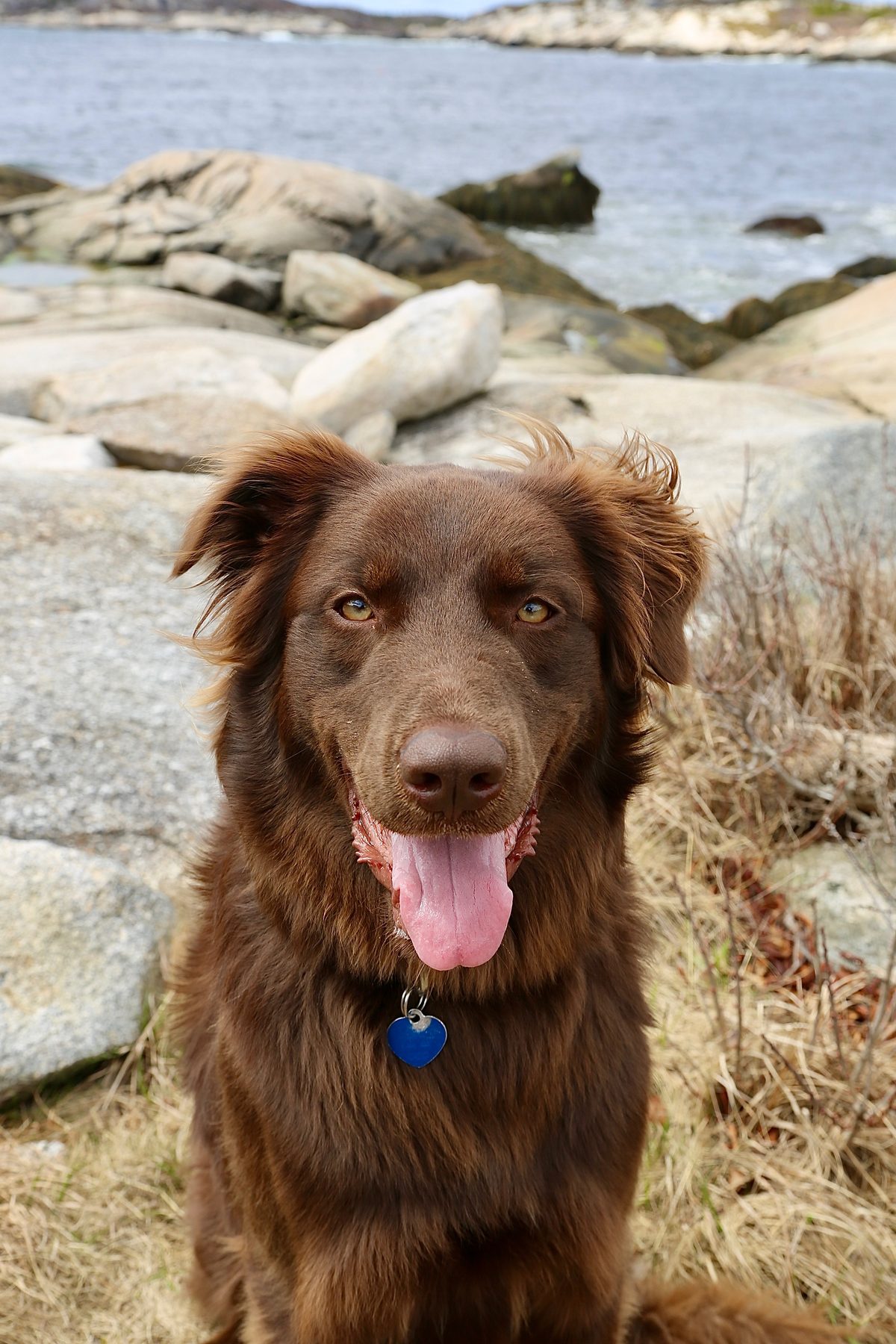
Australian Shepherd × Flat-Coated Retriever
From the Australian Shepherd side
Bred to move stock rather than fetch birds, but the drive, the biddable partnership, and the all-day engine are all there to build on. Point that at feathers and an Aussie with genuine bird interest makes a sharp, close-working upland companion.
- All-day stamina and hustle
- Trainable — wants a job and a partner
- Athletic and sharp in upland cover
- Redirect the heading and gripping instinct off stock
- Prove out birds and water — some are indifferent
- Keep its mind working or it invents its own job
Sources (2)
- USASA — AKC Breed Standard — Intelligent, active, even-disposed, with strong herding/guarding instincts and stamina to work all day; combines a stockdog’s independence with responsiveness to the handler.
- Applied Animal Behaviour Science (2016) — Herding breeds show elevated noise sensitivity, though fewer Australian Shepherds were fearful of loud sounds than Border Collies.
From the Flat-Coated Retriever side
A keen, birdy retriever on land and water that never quite grows up — the “Peter Pan” reputation is earned. All the aptitude is there; you’re mostly buying patience while it matures, and a dog that has to be part of the family to fully switch on.
- Keen and birdy on land and water
- Happy and tractable — wants to work with you
- Versatile across upland game and waterfowl
- Patience — slow to mature and silly for years
- A close bond and a gentle hand
- Keep sessions fun or it checks out
Sources (2)
- Flat-Coated Retriever Society of America — Character is the breed’s outstanding asset — responsive, bright, tractable; keen and birdy on land and water; needs a strong personal bond to reach potential.
- American Kennel Club — The “Peter Pan” of the Sporting Group — slow to mature, retains a puppy-like quality for life.
A cross doesn’t average out — you get both sets of tendencies. Play the strengths, plan for the asks, and let the dog in front of you overrule the label.
Your forecast
Easy wins
- Picks up cues fast
- Stamina & work ethic
Hard work
- Steadiness — slow to mature
- Installing an off-switch
Watch-outs
- Careful, gradual gun introduction
- Herding circle to redirect on recall
- Adolescent backslides are normal
- Working vs show lines vary — read the dog
The five-module trail for this dog
1 Foundation
comes easy
2 Retrieve
real work
3 Birds & gun
real work
4 Field & water
real work
5 First hunt
real work
Get the full Road Ahead for your dog
Your personalized plan, the training log, and first dibs on Founder pricing. Free, no spam.
By joining you’re asking us to email you your dog’s Road Ahead plus occasional launch news and Founder access. No spam, and you can unsubscribe from any message. See our Privacy Policy.
Inside the app
Five modules, start to first season.
A single, coherent method — not a pile of clips. The app walks you from an untrained adolescent to a steady hunting companion, one gated checkpoint at a time. It opens with the Foundation, free.
- 01
Foundation & the Honest Audit
Score where your dog actually is, then build rock-solid obedience — sit, recall, place, stay, and whistle conditioning — under an adolescent’s sloppiness.
- 02
Delivery to hand & first steadiness
A reliable hold and clean delivery, single marks into cover, and the beginnings of steadiness — sitting on the throw, releasing on cue.
- 03
Birds & bomb-proofing the gun
Transfer to real birds and build a genuinely positive gunfire association — gradual, paired with joy, and never rushed. The slowest, most careful phase.
- 04
Making a hunting dog
Upland quartering in gun range on the whistle, steadiness to the flush, tracking a runner, and a positive-only introduction to water.
- 05
Putting it together — your first season
Full chains under real conditions, controlled first hunts on easy days, and the maintenance that keeps a hunting dog sharp for years.
The method behind the modules
Welfare-forward and evidence-led.
Drive first, everything after
The program opens by assessing the drive that’s actually there — we find and build it, we don’t pretend to install it. A genuinely low-drive dog is the one honest exception, and you’ll know early.
Gunfire, gradual and paired with joy
Never a test shot. Noise starts far off and quiet, paired with something the dog already loves, and closes in only as the dog stays happy — the method every gun-dog authority agrees prevents gun-shyness.
Water by invitation, never by force
Progressive desensitization in warm, shallow water. A dog is never thrown or forced in — that’s how you make a water-shy dog, not a water dog.
Reward-based, and honest about the debates
We favor positive reinforcement — the veterinary-behavior consensus and the evidence on e-collars both point there. Where the field genuinely disagrees, like force-fetch, we say so rather than sell you a dogma.
Readiness-gated progression — advance when your dog is ready, never on a streak clock
Built around canine adolescence — regression and fear periods are expected, not punished
A problem-indexed troubleshooting library for when it stalls
Session logging built for the field — voice and one-tap, works offline
How to get it — the app is free to start: download it and run the Foundation with your dog today. Later modules layer in as the program grows. What’s different isn’t the price — it’s that the app watches your dog and tells you the truth: when it’s ready, and when to stop.
The app · Field Record
Your dog’s field record, in your pocket.
Field Record turns the whole method into a season-long journey you actually run — one honest skill at a time, coached from your own notes, sealed only when your dog proves it in the field.
A coach that reads your notes
Tells you exactly what to work on next — and, when your dog needs it, tells you to rest. Never a streak clock.
Skills sealed by proof, not taps
Every skill stays in pencil until your dog earns it in the field. No tapping through, no fake progress.
Built for the field, works offline
One-tap logging and a whistle timer that run with zero signal — the training happens away from wifi.
Now in early access
Get in before launch.
Field Record is in TestFlight now, opening to the App Store soon. Join the list for an early invite and first word when it’s live.
- Free to start — begin with the Foundation
- A real training tool, not a video library
- Your feedback shapes what ships next
Free to start. We’ll send a TestFlight invite as spots open. By joining you agree to receive launch emails; unsubscribe anytime. See our Privacy Policy.
Straight answers
Honest answers.
Will this really work for my mixed breed or rescue?
Yes — if the dog has genuine drive, and the first module is how you find out. Breed explains only about 9% of an individual dog’s behavior, so a shelter label tells you far less than what the dog actually does with a bird, a bumper, and a bit of noise. The honest catch: off-breed and rescue successes are real but tend to be the exception rather than the rule, so we test for drive first instead of promising it. With a rescue we also assume a possible noise or fear history and go slow with positive reinforcement.
How do I know when my dog is actually ready — and that I’m not over-training?
This is the part every video course leaves you to guess, and it’s the whole point of the app. The coach reads your own session notes and only clears a skill when your dog has proven it — clean reps, across separate sessions, not a rep count you tapped through. If your notes show rising arousal or a dog shutting down, it doesn’t hand you a harder drill — it tells you to stop and rest. Short, spaced sessions that end on a win beat daily grinding, and the app enforces that instead of selling you a streak.
What exactly are you promising — and what aren’t you?
A steady, obedient dog that retrieves to hand, handles birds and gunfire, works cover, and does water retrieves — a genuine hunting companion. We are not promising field-trial titles. Elite competition is a genetics-and-resources game where amateur-trained dogs rarely place, and we won’t pretend otherwise. Behavior is genuinely heritable, so a purpose-bred dog gets a real head start; our claim is only that the head start isn’t the whole race.
Is it safe to introduce gunfire myself?
Handled properly, gun tolerance is a realistic goal for a steady, driven dog — but it’s earned, not guaranteed. The universal rule among gun-dog trainers is to never fire a gun near a dog just to “test” it; gun-shyness is overwhelmingly manufactured by a bad first bang, not born. We introduce noise gradually, at distance, paired with something the dog loves, and we’re explicit that the gun, first live birds, and any collar work are the moments to get an experienced hand alongside you.
Do you use e-collars or force-fetch?
We favor reward-based training. A peer-reviewed trial found e-collars offered no advantage over reward-based methods while carrying welfare costs, and the leading veterinary-behavior body recommends reward-based training and finds no evidence aversive tools are necessary. Force-fetch is a genuine, unsettled debate — plenty of respected trainers get a reliable retrieve without it — so we teach the positive path and tell you honestly where the field disagrees, rather than selling a dogma either way.
Do I need special equipment or land?
To start, no — the foundation work happens in your yard with a whistle, a bumper, and treats. Later phases need access to some open ground and, eventually, birds. We’ll help you find what you need, and flag the local season and dog-training regulations to check first.
How do I get it, and what does it cost?
It’s an app. The Foundation module is free — download it and start training your dog today. We’re in early access (TestFlight) now, opening to the App Store soon; join the early-access list and we’ll send an invite plus first word when it’s live. Later modules and a membership layer in as the program grows, but the core is free to start and there’s nothing to buy up front.